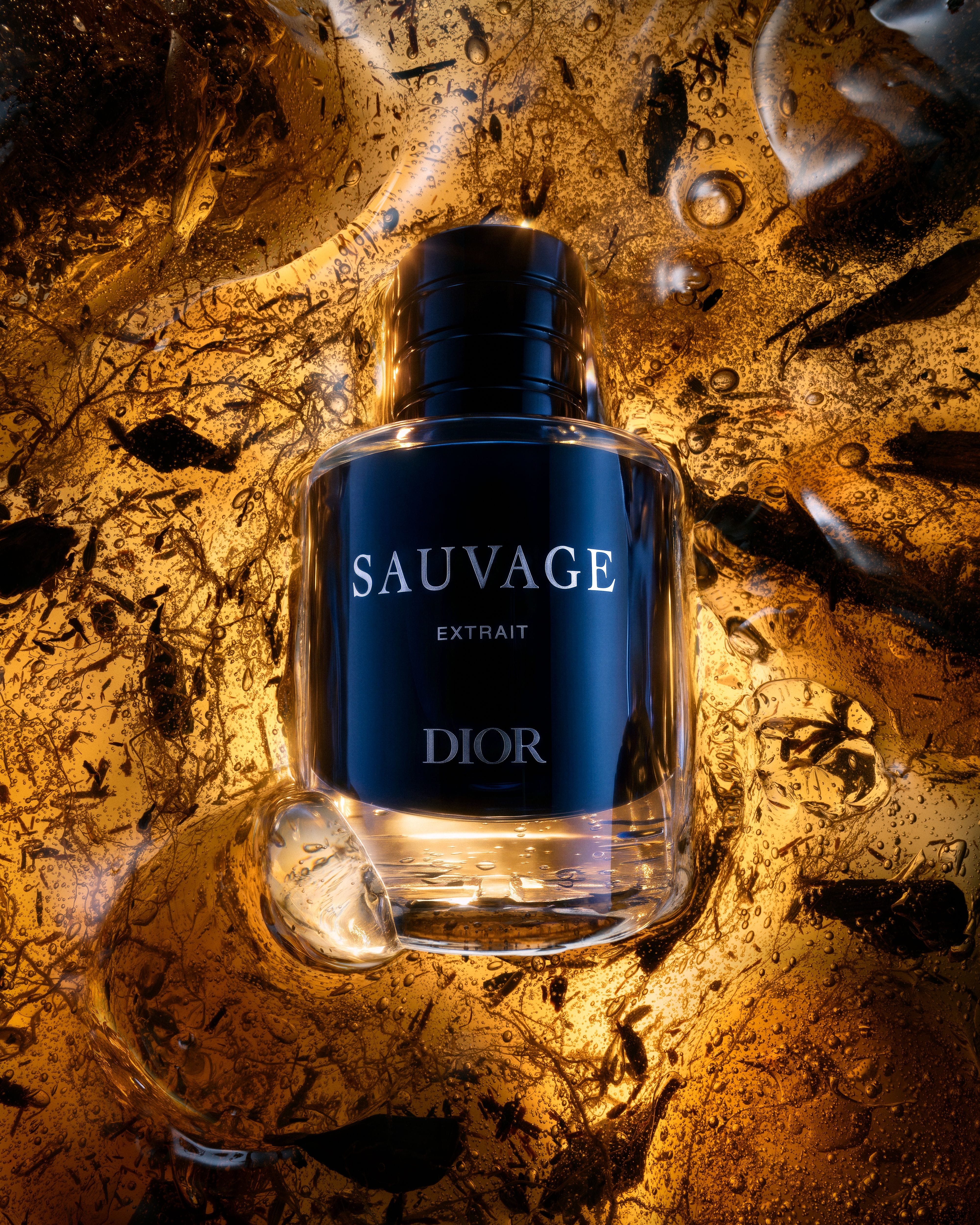
Dior Sauvage Extrait, photographed by Minorstep for GQ × Dior.
Most product images are specific in the least important sense: the right object is in them.
Take it out. The set, light and atmosphere carry on perfectly well.
Put something else in. Perfume becomes a watch. A phone becomes a shoe. Does the picture mind?
If it doesn’t, the product was only visiting.
A new set, palette and lighting scheme are easy. The harder part is making a world that depends on the object inside it.
A lot of polished product imagery fails here. It is premium, tactile, cinematic, futuristic. Fine. But swap the product and none of the decisions become wrong.
AI makes that easier to hide. You can make a hundred finished-looking directions before lunch. You can also avoid deciding why this picture exists.
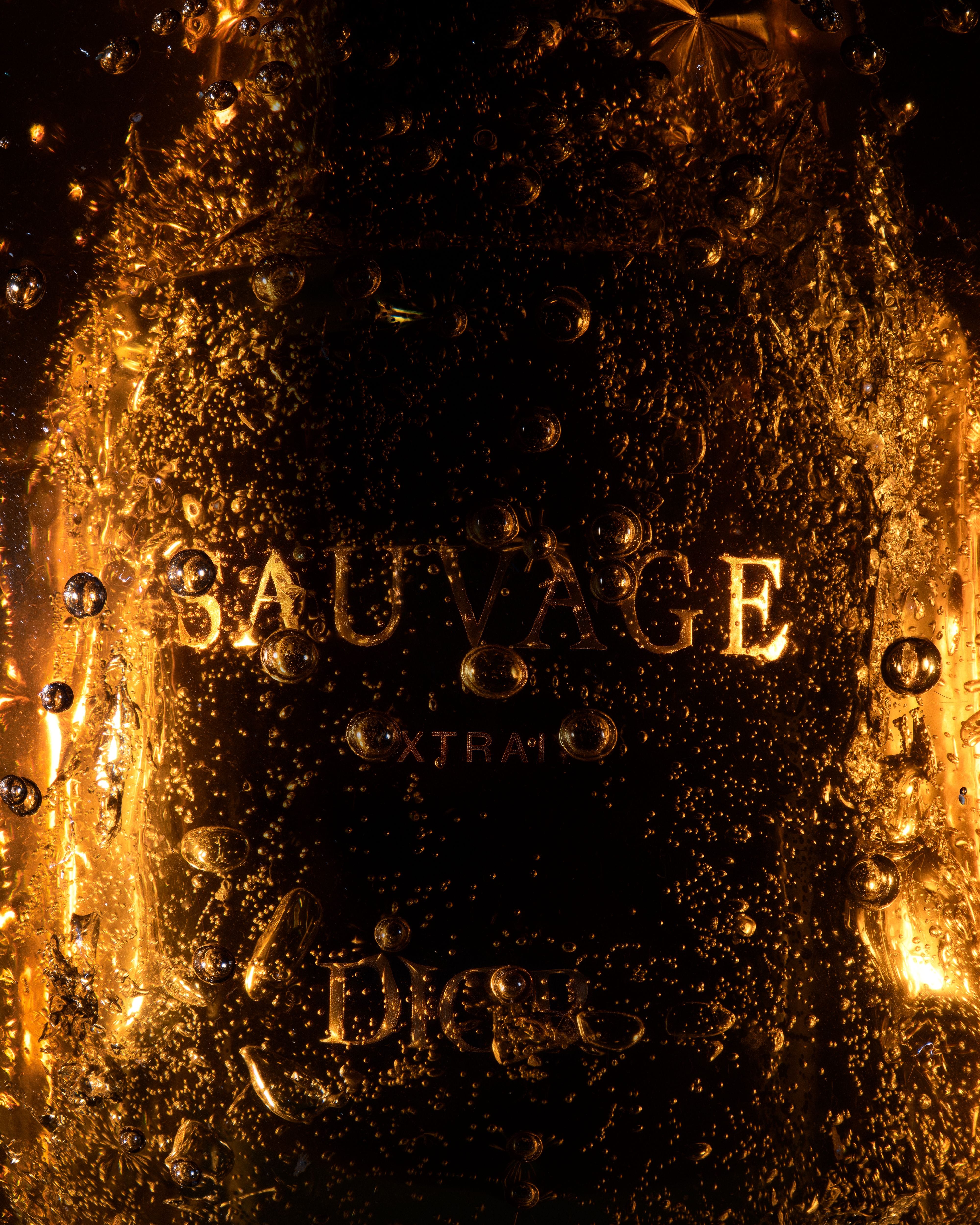
For the tighter frame, we shot through a bespoke amber-like material to fossilise the bottle in-camera.
Most briefs arrive as an object followed by adjectives. A bottle. Luxurious. Dark. Sensual. That is not yet an image.
The useful word in our Dior × GQ shoot was concentration. Not concentration as a label beneath the logo, but as a physical condition. The amber had to feel dense enough to hold, press against and partly consume the bottle.
That decision controlled the scale, material and light. In the wide frame, the bottle appears to generate its environment. In the detail, it is almost preserved inside it. Replace it with a phone and the picture becomes nonsense.
This is what I mean by visual translation. Not adding a symbol for a product feature, but letting the feature interfere with the whole frame.
Fragrance can diffuse, cling or leave residue. Speed can stretch an exposure. A camera can crop, enlarge or interrupt. Each verb gives you something concrete to do.
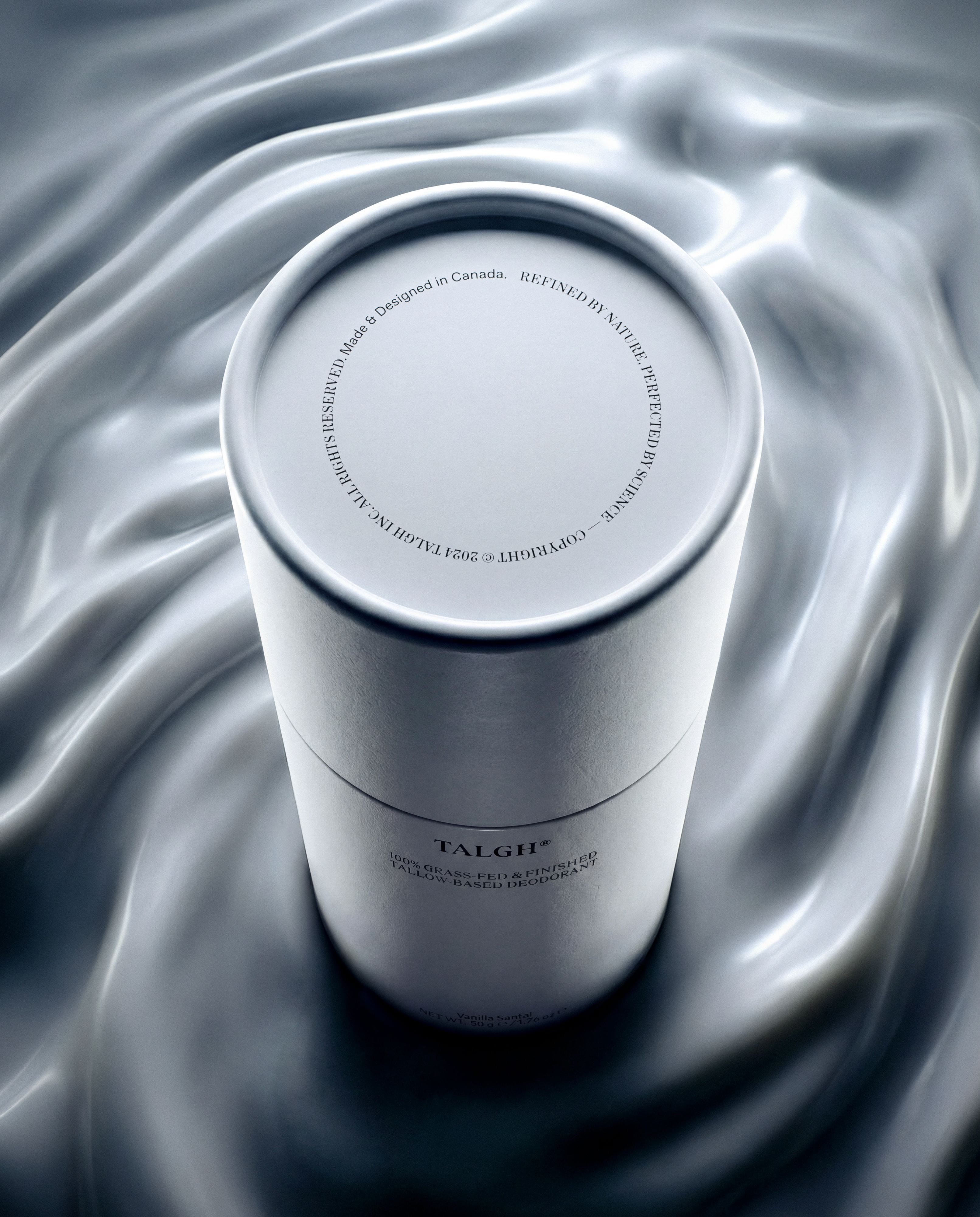
Talgh, with vanilla and sandalwood rendered as dense metallic flow.
For Talgh, vanilla and sandalwood named the scent, not the picture. I was more interested in how they felt together: dense, soft, warm, slow. Those qualities became flow, pressure and metallic softness.
Research only helps once the question is precise. Otherwise a moodboard is just a wall of finished answers to somebody else’s problem.
I want references that show behaviour. How does this liquid fold? What happens to this surface under pressure? How does a body carry weight?
That usually takes the search outside the category. Chladni figures show vibration arranging sand into visible patterns. Schlieren photography shows air being disturbed around a moving object. For fragrance, the useful reference may be capillary action, smoke, mineral deposits, geology or ritual.
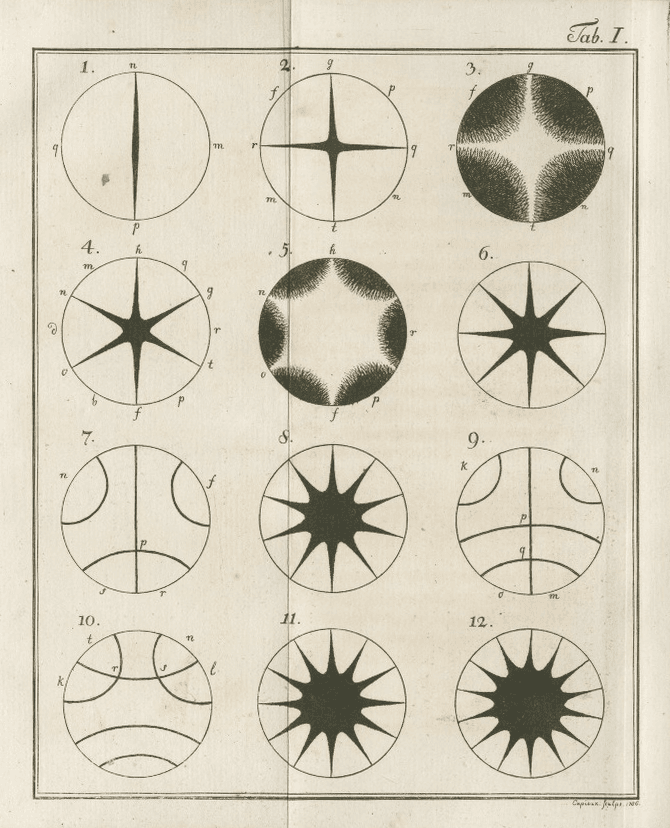
Ernst Chladni, Plate I from Entdeckungen über die Theorie des Klanges (1787). Digital image: Max Planck Institute for the History of Science, CC BY-SA 3.0 DE, via The Public Domain Review.
The scientific image is not automatically clever. Chrome, mist and laboratory imagery all become mannerisms once the behaviour has been detached from them. The point is to understand what is happening, then build the picture from that.
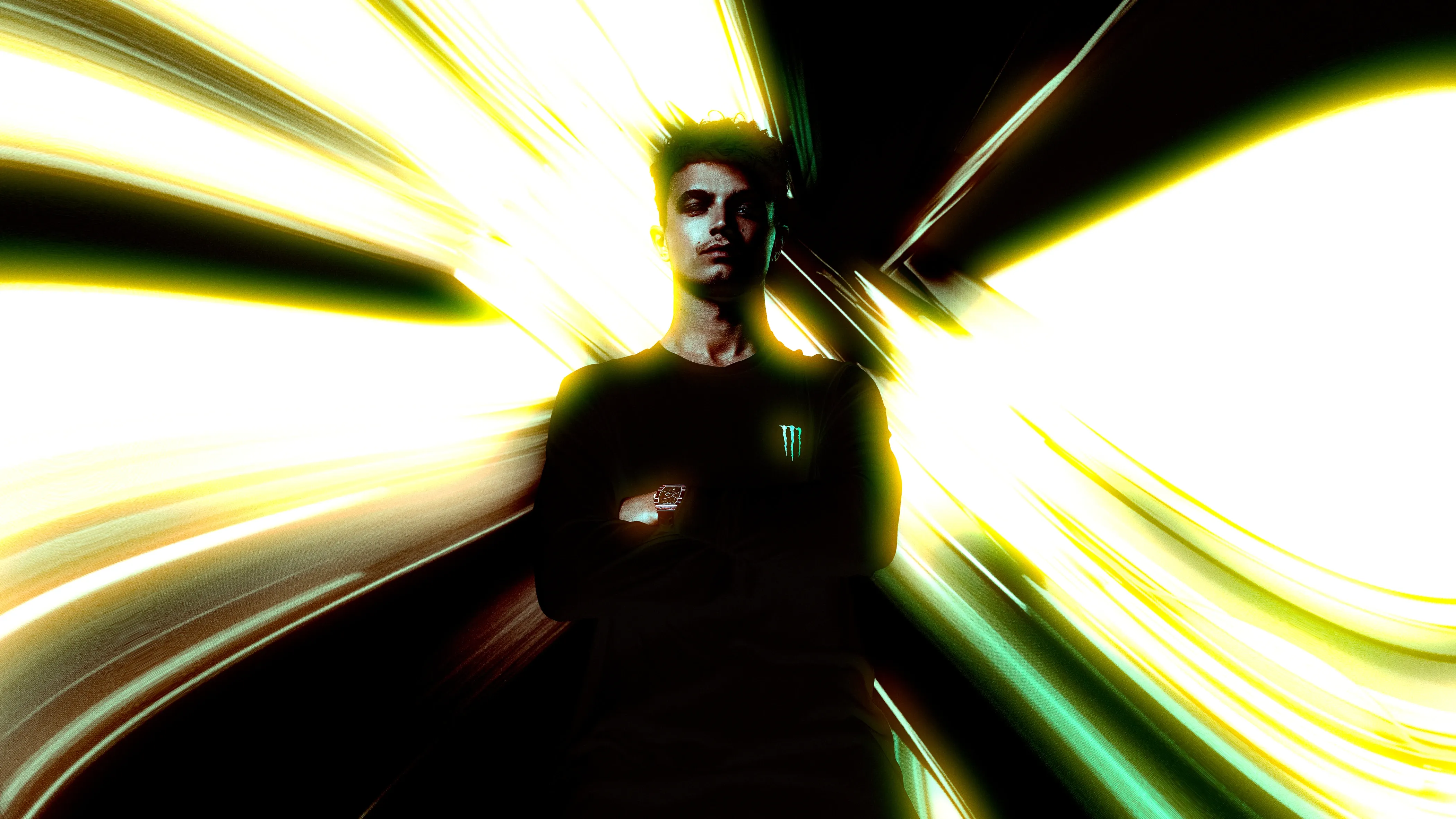
A moving LED backdrop, shutter drag and a zoom pull distort the space around Lando Norris.
The medium comes later. Photography, practical effects, CGI and generative tools each behave differently. Use whichever makes the idea believable.
For Lando Norris, speed needed to change the portrait, not sit behind it as a graphic. A moving LED backdrop, shutter drag and an in-camera zoom pull stretched the background around a still body. The technique carried the idea.
Photography can give you resistance, chance and physical reaction. CGI can control scale exactly. Generative tools are useful when the world needs to mutate faster or further than a conventional pipeline allows.
None of them guarantees a specific result. A photograph can be generic. An AI image can be exact. The medium has done its job when the image could not have made its point as clearly without it.
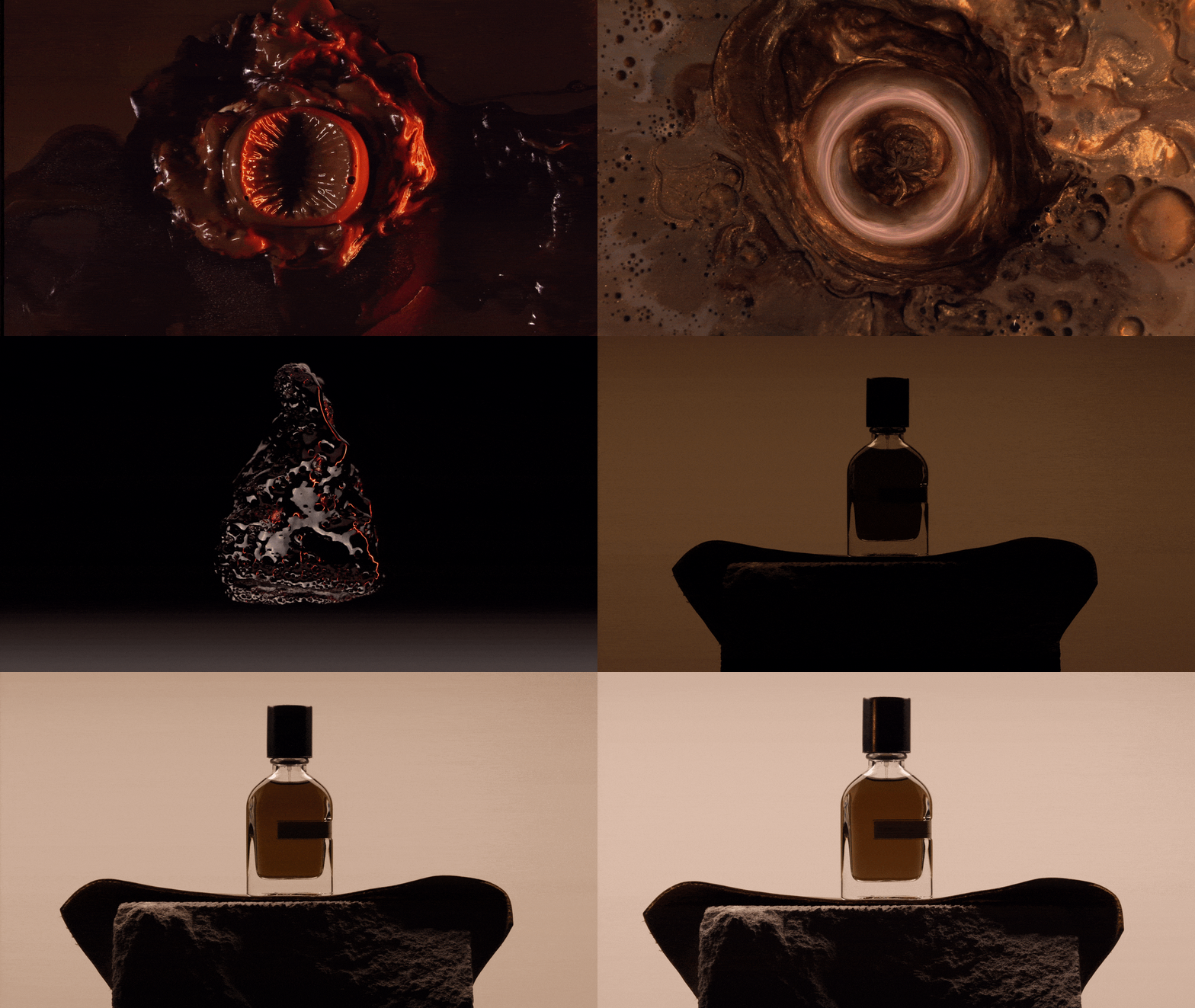
A moving still from Stercus, where the bottle gives way to an unstable organic body.
In Stercus, the bottle almost disappears. What remains is an organism, a surface and a behaviour. It still belongs to the fragrance because those choices came from its bodily, unstable character.
Before production, force the concept into one sentence:
Because the product ______, the image must ______.
Then interrogate the frame:
- What is it saying about the product?
- Which decisions only make sense because that claim is true?
- Does the reference show useful behaviour, or only a look?
- What becomes wrong when the product is swapped?
If the answers are premium, cinematic, tactile or futuristic, you are still describing the finish.
Run the swap again. Watch where perfume sits. Shoe where phone stands.
If nothing important breaks, keep working.
When the concept is specific, the substitution exposes it immediately. Scale, movement and material stop making sense because they were chosen for the product rather than added around it.